
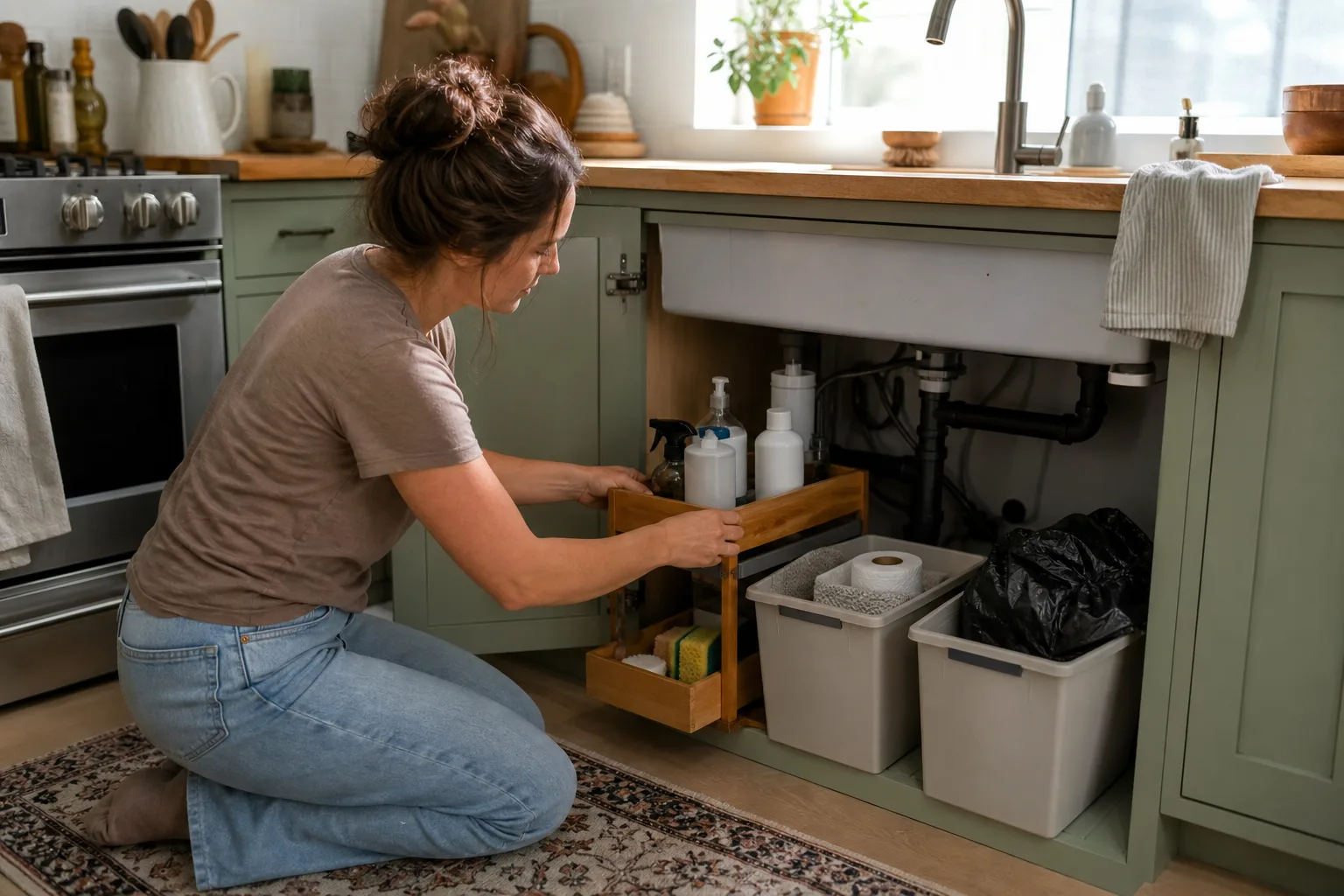
The cabinet looks roomy until the door opens: a drain bend crosses the center, valves need access, and the disposal occupies one side. A generic two-tier shelf can fit the listed cabinet width and still collide with every important object inside.
This guide does not claim hands-on testing of every option on the market. It translates an everyday household problem into a practical buying checklist, so you can compare current products against your own room, routine, and tolerance for maintenance.
The quick answer
Measure the plumbing map, not just the cabinet box. Removable bins and a narrow pull-out on the clear side are more adaptable than a single organizer that tries to fill every inch.
What to look for before you buy
Start with the constraint that creates the most friction in your home. A feature is valuable only when it changes that constraint without adding a harder storage or cleaning problem.
Protect service access
Keep shutoff valves, pipe joints, and disposal reset access visible. Storage should move in one lift if a leak appears.
Measure the door swing
Hinges and door frames reduce usable width. Measure the opening as well as the interior before choosing a pull-out bin.
Contain small leaks
A washable tray can reveal drips before they damage the cabinet. Do not pack absorbent paper tightly around plumbing.
Choose by household scenario
The same product format can be helpful in one room and irritating in another. Use these scenarios as a shortlist, then verify dimensions, care instructions, and current availability on the seller or manufacturer page.
Awkward center pipe
Use two separate bins on either side so the pipe remains visible and each category lifts out independently.
Deep cabinet
A smooth pull-out tray brings the back forward, but confirm it clears hinges and any pipe that angles toward the door.
Frequent moves
Freestanding modular pieces transfer to a bathroom or laundry area if the next cabinet has a different layout.
What not to overpay for
A long feature list can distract from fit. Skip complexity that does not remove a repeated household step, and be cautious when a specialized replacement part is essential to basic use.
- Adhesive hardware that may damage the rental finish.
- Decanting chemicals into unlabeled containers.
- Storing towels where a slow leak can soak them unnoticed.
Make the purchase survive real life
Keep daily supplies in the front bin, backups behind them, and review the cabinet when a bottle is replaced. A monthly flashlight check around joints costs less effort than discovering a damp cabinet floor after the fact.
Before ordering, take one final measurement and decide where the item will live when it is not being used. That single decision prevents many useful products from becoming visible clutter.
Frequently asked questions
Can cleaners be stored under the sink?
Follow product labels and keep hazardous products away from children and pets, ideally in locked or inaccessible storage.
Are stackable drawers better than bins?
Drawers improve access but often waste space around plumbing. Bins are more flexible when the interior is irregular.
Should the cabinet floor be lined?
A removable waterproof tray can help contain small drips. Avoid permanent coverings that hide moisture or violate lease terms.
Keep reading
Related guides
 Kitchen
COSORI TurboBlaze 6-Quart Air Fryer for Single-Basket Family Dinners
For anyone feeding three to five people most weeknights, the COSORI TurboBlaze packs a full six-quart basket, nine cooking presets, and a 450 degree ceiling into a single easy-clean unit.
Read review → Kitchen
The Small-Kitchen Cutting Board Guide for Weeknight Cooks
Choose a board around counter depth, cleanup, and the food you actually prep—not the oversized board a studio kitchen cannot hold.
Read guide → Kitchen
CASABREWS CM5418 Espresso Machine: A Simple Start for First-Time Baristas
CASABREWS CM5418 gives first-time espresso buyers a compact 20-bar machine that pulls real shots and froths milk for lattes without demanding barista-level skill or counter space.
Read review →