
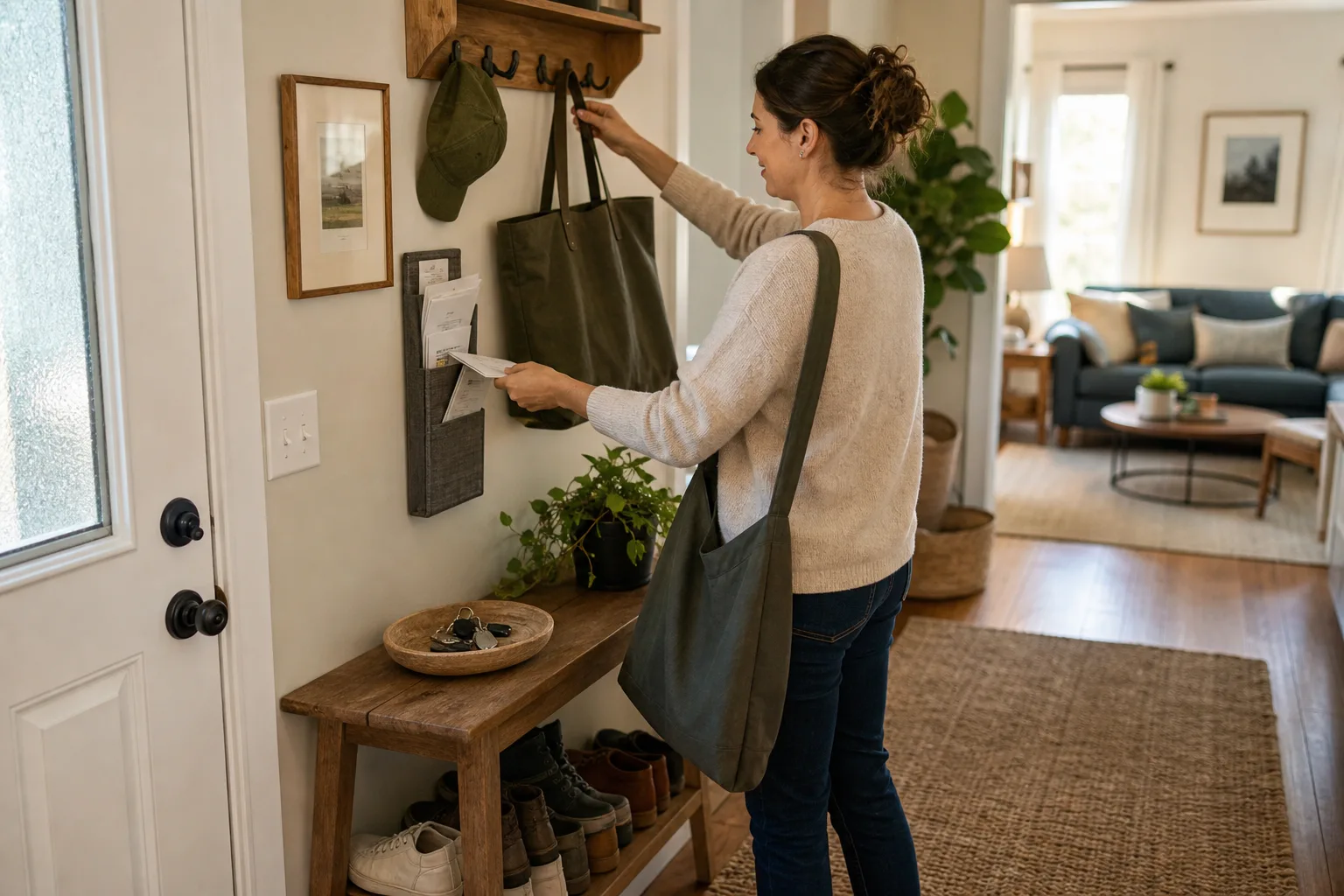
Keys land on the kitchen counter, mail covers the shoe bench, and a tote blocks the front door because each item has a different next step. The entryway needs a sequence, not one generous basket for everything.
This guide does not claim hands-on testing of every option on the market. It translates an everyday household problem into a practical buying checklist, so you can compare current products against your own room, routine, and tolerance for maintenance.
The quick answer
Use a small tray for daily pocket items, hooks for bags that leave again, and a vertical slot for action mail. Keep recycling or shredding downstream so paper does not become permanent entry furniture.
What to look for before you buy
Start with the constraint that creates the most friction in your home. A feature is valuable only when it changes that constraint without adding a harder storage or cleaning problem.
Follow hand height
Place keys and bags where they naturally leave the hand, while keeping hooks clear of faces and walkways.
Limit the container
A shallow tray signals capacity quickly. Deep bowls hide receipts, old keys, and objects with no next action.
Separate paper states
Incoming mail, action mail, and recycling are different jobs. Only the first two belong near the door.
Choose by household scenario
The same product format can be helpful in one room and irritating in another. Use these scenarios as a shortlist, then verify dimensions, care instructions, and current availability on the seller or manufacturer page.
No entry furniture
A narrow wall rail with hooks and a tiny ledge can create the sequence without taking floor space.
Family entrance
Give each person one hook or cubby and keep shared keys in a distinct central tray.
Rental wall
Use a slim freestanding rack or approved removable hardware within safe load limits.
What not to overpay for
A long feature list can distract from fit. Skip complexity that does not remove a repeated household step, and be cautious when a specialized replacement part is essential to basic use.
- An oversized basket that becomes unsorted storage.
- Hooks projecting into a narrow walking line.
- Leaving personal or sensitive mail visible near an exterior door.
Make the purchase survive real life
Do a two-minute evening reset: return keys, move action paper to the work area, recycle envelopes, and repack the bag leaving tomorrow. The drop zone should be mostly empty, not impressively full.
Before ordering, take one final measurement and decide where the item will live when it is not being used. That single decision prevents many useful products from becoming visible clutter.
Frequently asked questions
What belongs in an entryway tray?
Only daily pocket items such as current keys and perhaps a wallet. Move coins, receipts, and occasional tools elsewhere.
How many hooks are useful?
One active hook per person plus a small shared allowance. Extra hooks often attract dormant bags.
Should mail stay by the door?
Only briefly. Give action mail a scheduled route to a more private work area.
Keep reading
Related guides
 Everyday Living
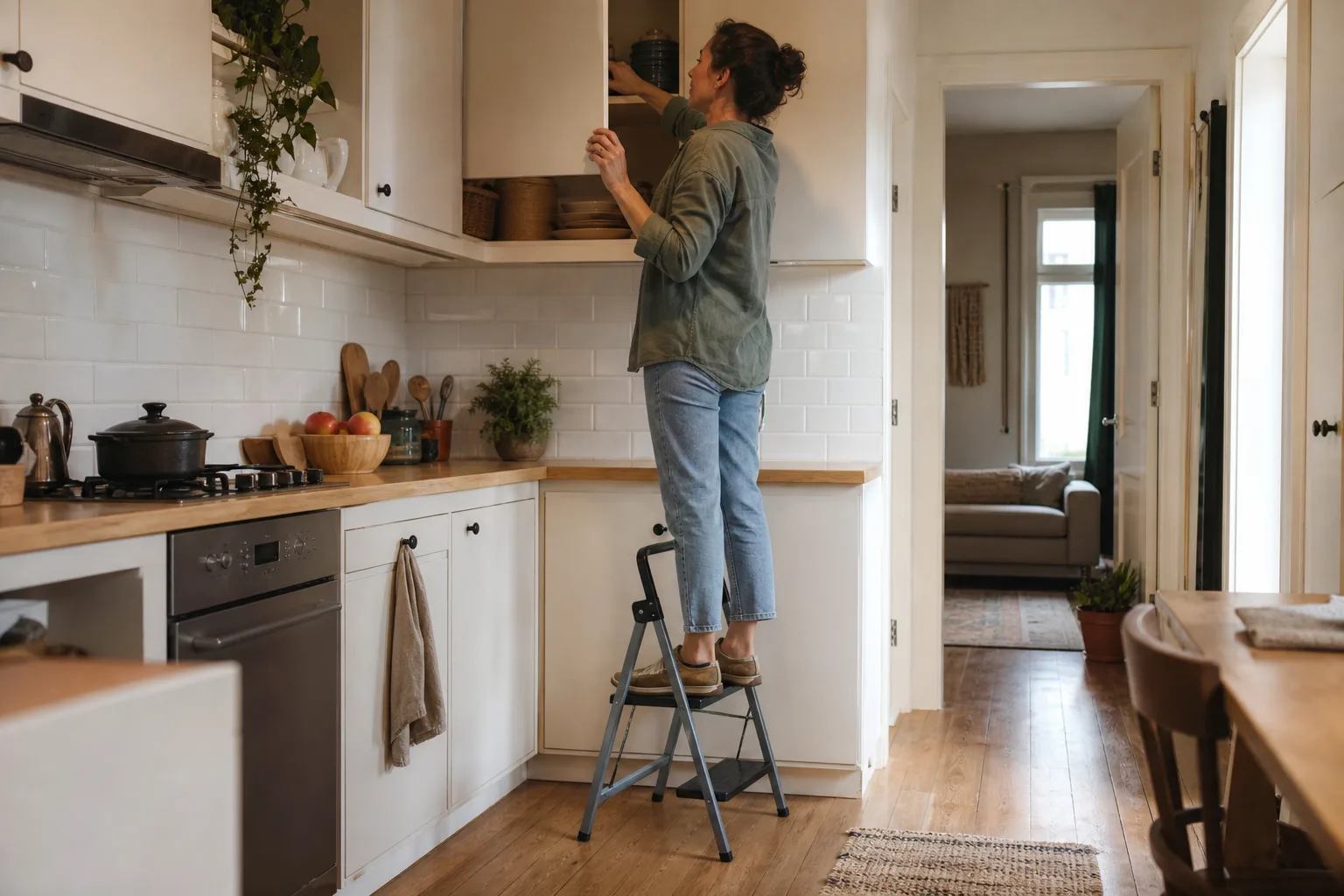
The Foldable Step Stool Every Small Home Eventually Needs
Choose stability, standing height, lock behavior, and a storage position that does not make safe access inconvenient.
Read guide →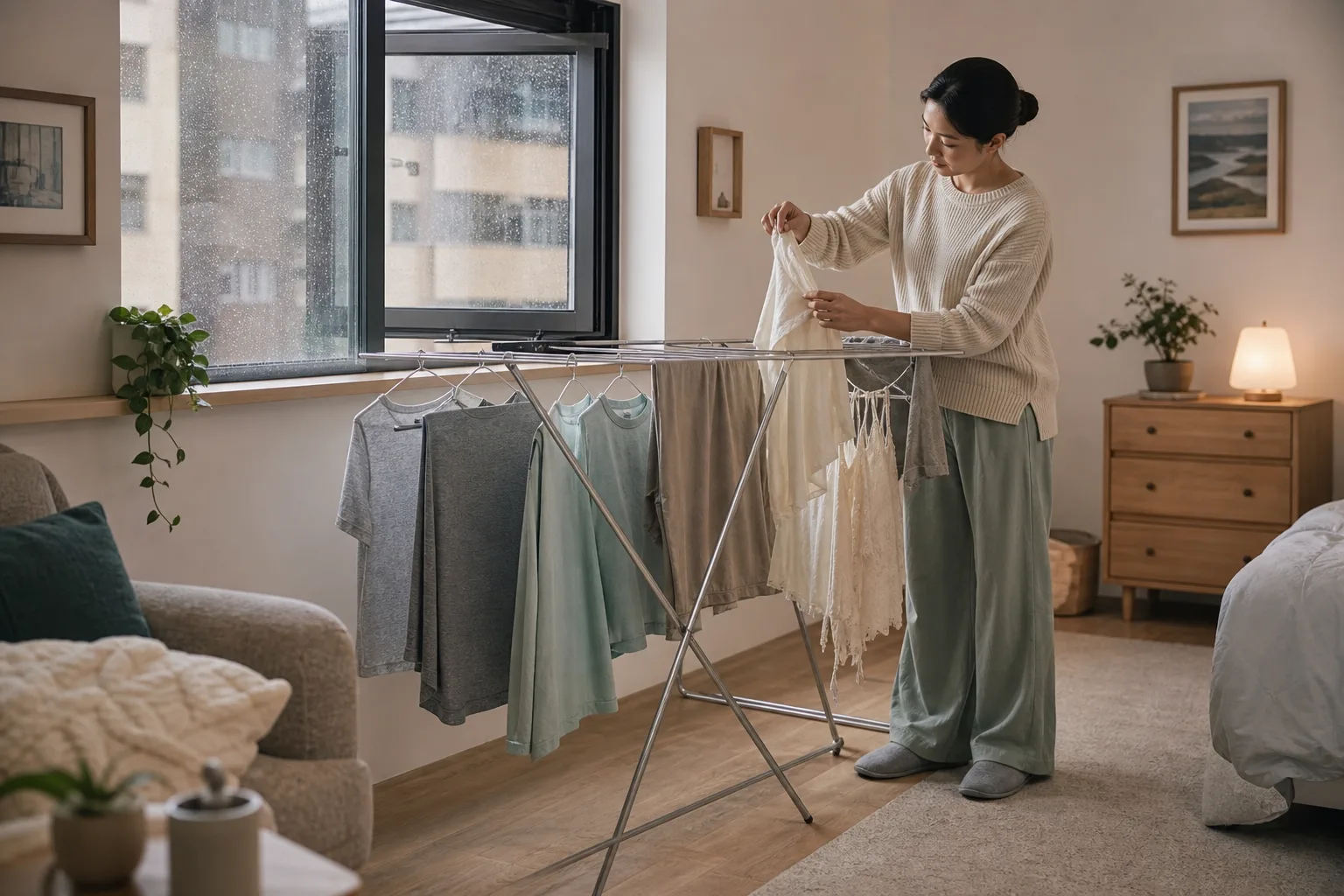 Everyday Living
Indoor Drying Racks for Rainy Weeks and Delicate Laundry
Balance hanging length, airflow, loaded stability, folded size, and the walkway the rack temporarily occupies.
Read guide → Everyday Living
Refillable Soap Dispensers That Do Not Create More Work
Choose pump reliability, fill opening, visibility, stable footing, and a refill process that does not coat the sink in soap.
Read guide →