
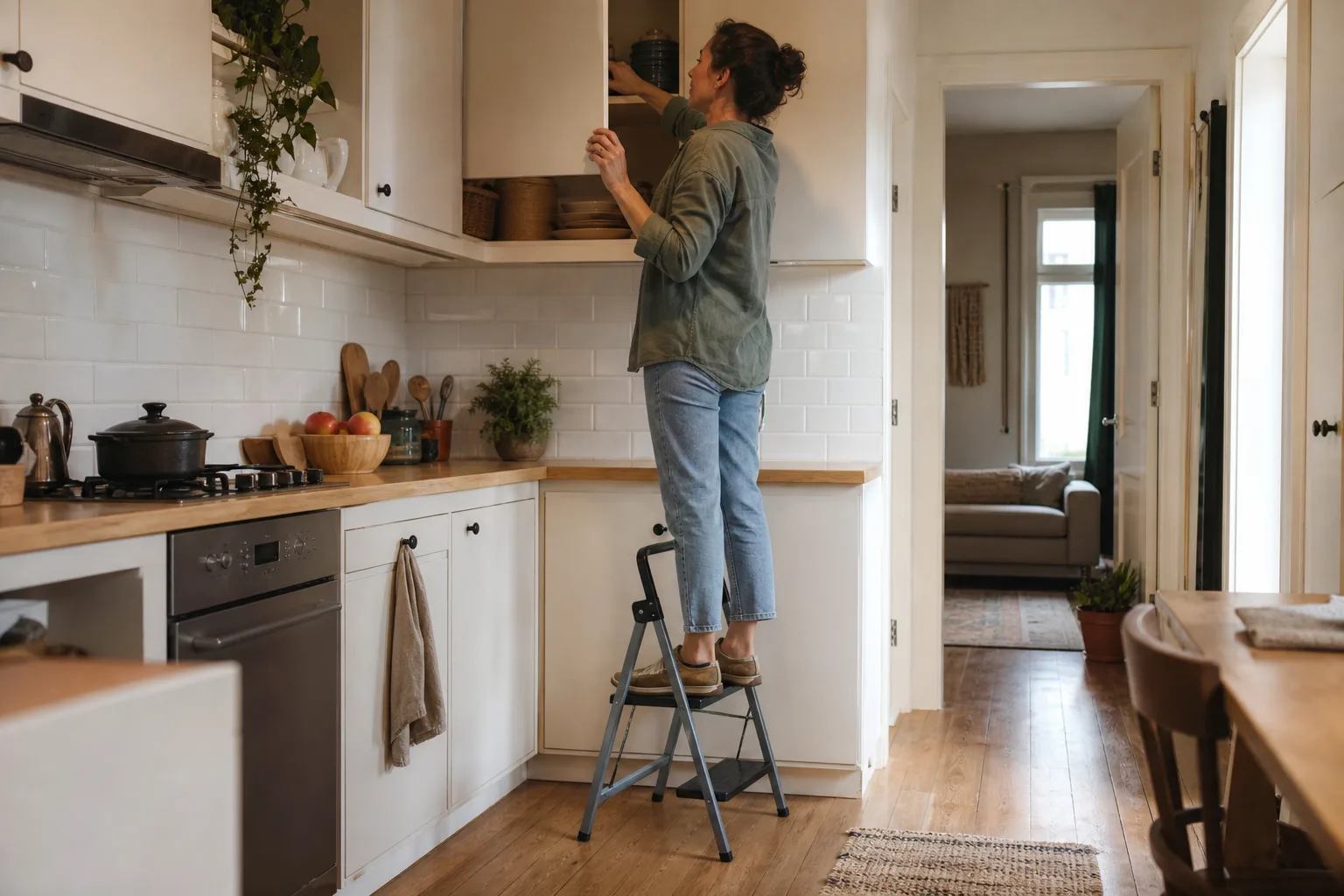
The spare paper towels live above the refrigerator, and a dining chair is closer than the stool in the back of a crowded closet. Safe equipment only helps when it is stable, appropriate to the reach, and easier to retrieve than an unsafe shortcut.
This guide does not claim hands-on testing of every option on the market. It translates an everyday household problem into a practical buying checklist, so you can compare current products against your own room, routine, and tolerance for maintenance.
The quick answer
Choose the lowest standing height that safely reaches the household’s common targets, with a broad non-slip platform, a clear locking mechanism, and published load guidance. Store it close to the zone where it is most often needed.
What to look for before you buy
Start with the constraint that creates the most friction in your home. A feature is valuable only when it changes that constraint without adding a harder storage or cleaning problem.
Measure the reach
Estimate the user’s comfortable reach plus platform height. Do not stand on parts not designed as steps or overreach sideways.
Inspect the open stance
The stool should lock fully on a level clear floor. Feet, hinges, and platform texture matter more than folded thinness alone.
Plan folded storage
Measure folded thickness, height, and the grip point. A stool behind heavy items will not be used at the right moment.
Choose by household scenario
The same product format can be helpful in one room and irritating in another. Use these scenarios as a shortlist, then verify dimensions, care instructions, and current availability on the seller or manufacturer page.
Kitchen high shelf
A two-step model with a top handle can support a forward-facing, controlled reach.
Occasional utility work
Choose a height and design rated for the task; some jobs require a proper ladder instead.
Very tight storage
A slim folding stool helps, but never trade away platform size or reliable locking merely to save an inch.
What not to overpay for
A long feature list can distract from fit. Skip complexity that does not remove a repeated household step, and be cautious when a specialized replacement part is essential to basic use.
- Using a stool on wet, uneven, or cluttered floors.
- Standing on a top rail or step not designed for standing.
- Choosing by load rating without checking stability and reach.
Make the purchase survive real life
Open the stool completely, face the task, keep your body centered, and step down to reposition instead of leaning. Wipe the feet and inspect hinges periodically; retire damaged equipment.
Before ordering, take one final measurement and decide where the item will live when it is not being used. That single decision prevents many useful products from becoming visible clutter.
Frequently asked questions
Is one step enough?
Only if it creates a comfortable, centered reach for the actual target. Measure rather than guessing.
Are folding stools safe for children?
They are not toys. Follow age, supervision, and product guidance, and store them securely.
When is a ladder required?
When the reach, task duration, tools, or work position exceeds what the stool is designed to support.
Keep reading
Related guides
 Everyday Living
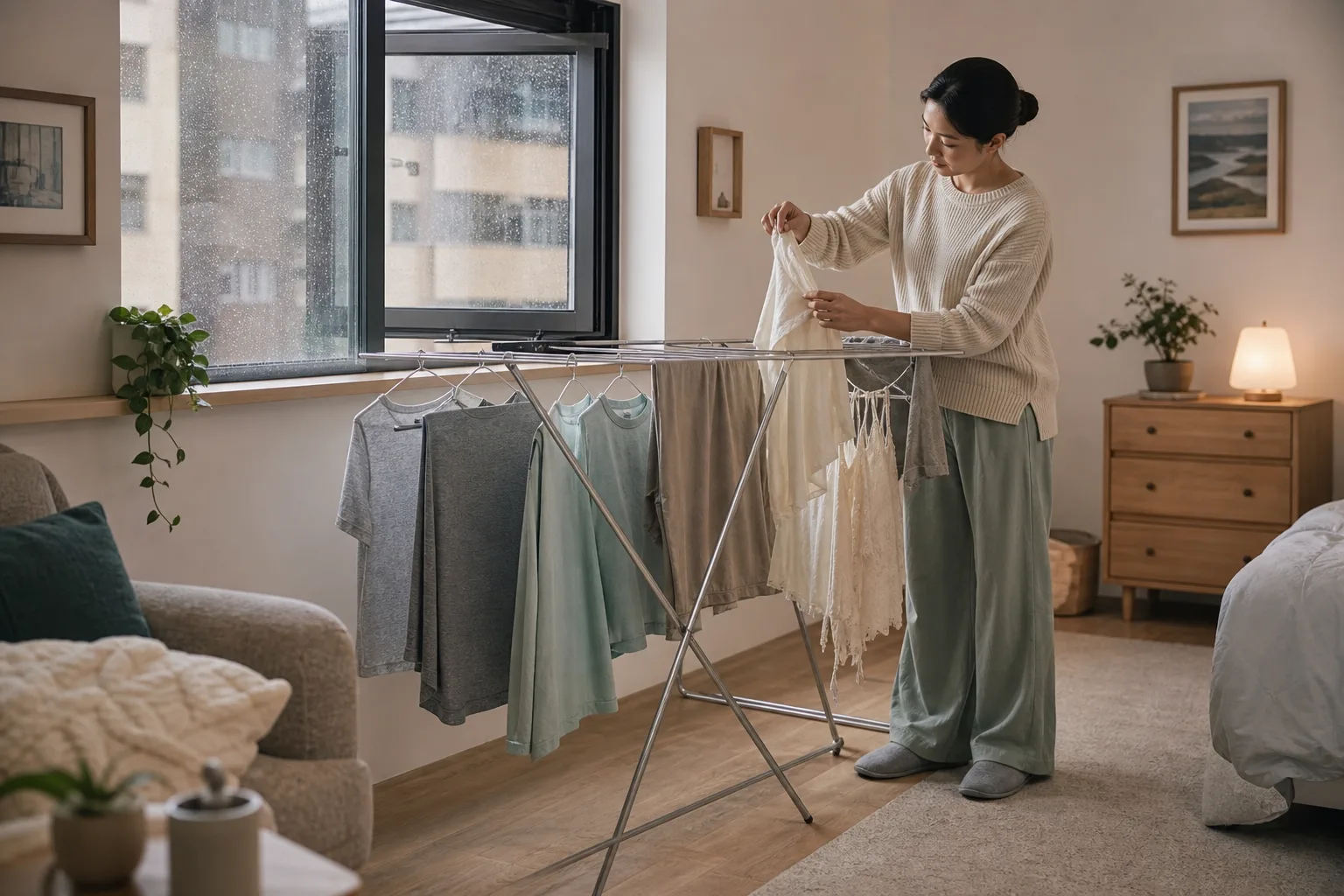
Indoor Drying Racks for Rainy Weeks and Delicate Laundry
Balance hanging length, airflow, loaded stability, folded size, and the walkway the rack temporarily occupies.
Read guide →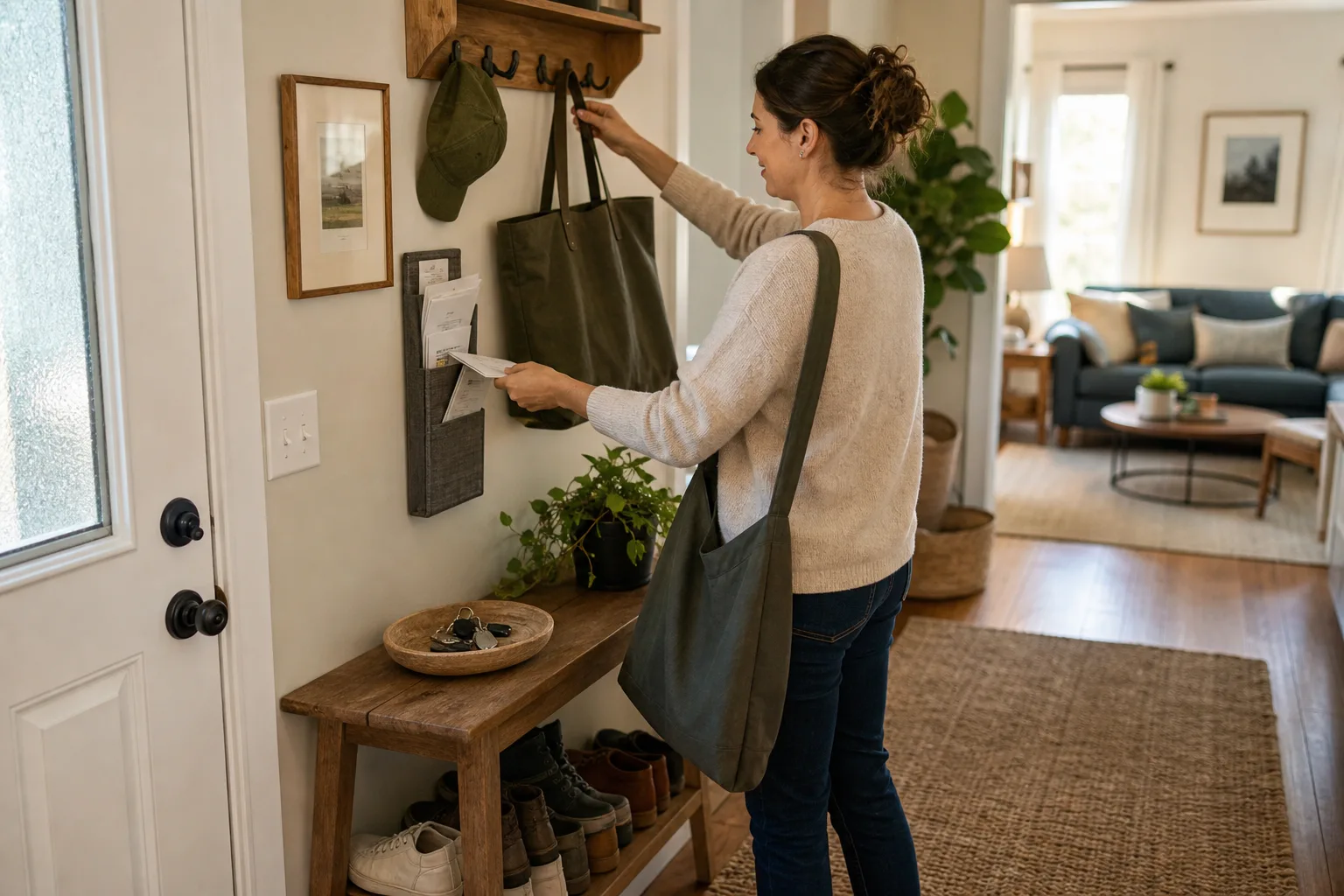 Everyday Living
A Calm Entryway Drop Zone for Keys, Mail, and Bags
Build a short landing sequence that separates items leaving tomorrow from paper that needs a decision.
Read guide → Everyday Living
Refillable Soap Dispensers That Do Not Create More Work
Choose pump reliability, fill opening, visibility, stable footing, and a refill process that does not coat the sink in soap.
Read guide →