
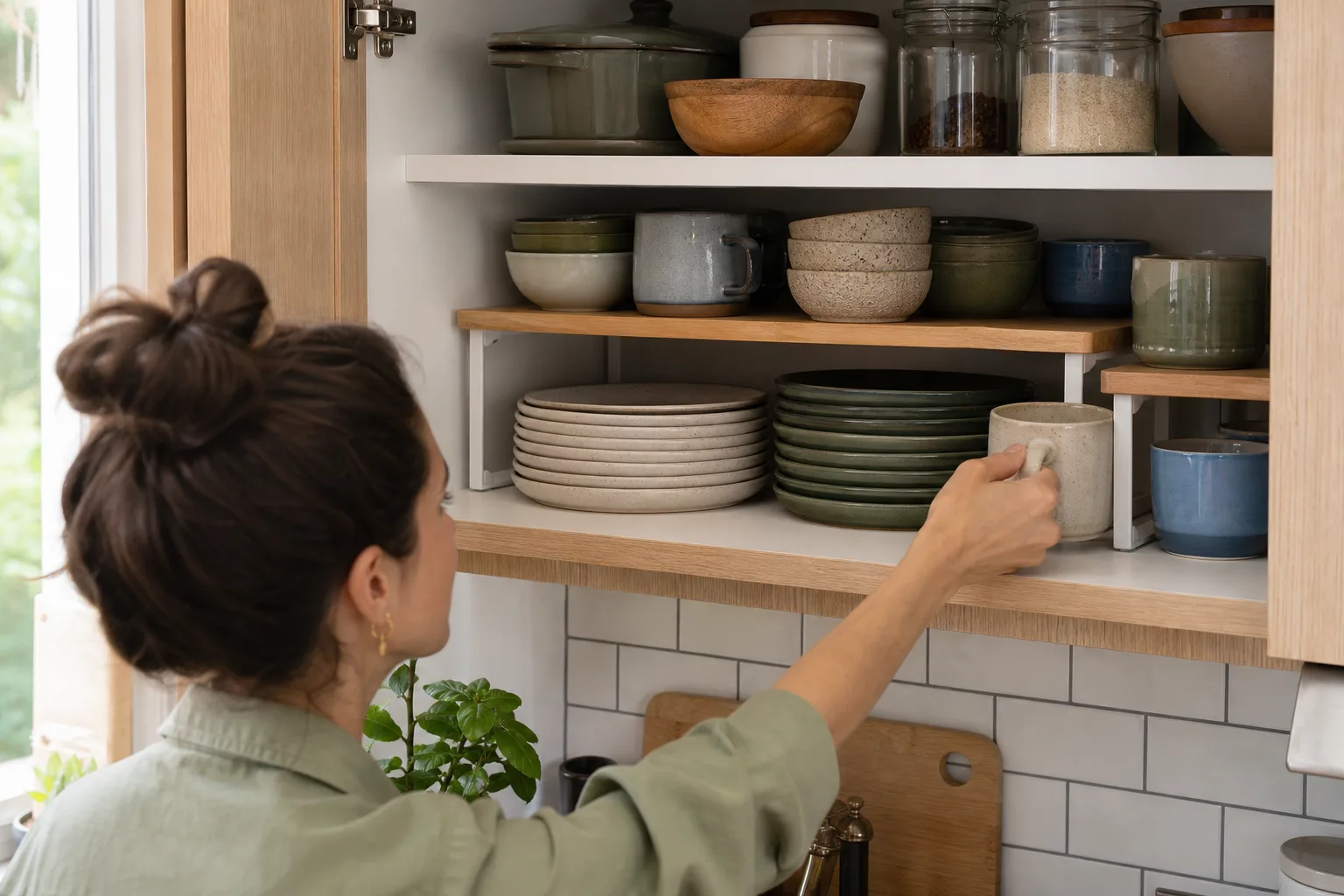
A stack of bowls sits on dinner plates, so setting the table starts by moving breakfast. The cabinet technically has space above the dishes; it simply is not divided where the routine needs it.
This guide does not claim hands-on testing of every option on the market. It translates an everyday household problem into a practical buying checklist, so you can compare current products against your own room, routine, and tolerance for maintenance.
The quick answer
Add a riser where two categories are repeatedly unstacked from each other. Check vertical clearance, leg footprint, and weight guidance, then leave enough hand space to lift the lower item forward.
What to look for before you buy
Start with the constraint that creates the most friction in your home. A feature is valuable only when it changes that constraint without adding a harder storage or cleaning problem.
Measure the stack
Record the height of the lower dishes plus the riser and the tallest item above. Include the cabinet frame at the opening.
Check stability
Wide feet and a level shelf matter. Use products within published load limits and place heavier dishes low.
Preserve visibility
One useful extra level beats a dense tower that hides the back and turns retrieval into a puzzle.
Choose by household scenario
The same product format can be helpful in one room and irritating in another. Use these scenarios as a shortlist, then verify dimensions, care instructions, and current availability on the seller or manufacturer page.
Plates and bowls
Separate the two daily stacks so neither must be lifted to reach the other.
Mug shelf
A low riser can create a second row while keeping handles visible and easy to grasp.
Pantry cans
Tiered risers show labels at the back, but confirm that the front lip does not block removal.
What not to overpay for
A long feature list can distract from fit. Skip complexity that does not remove a repeated household step, and be cautious when a specialized replacement part is essential to basic use.
- Stacking risers not designed to interlock.
- Loading fragile or heavy items above eye level.
- Buying a riser wider than the cabinet opening even if the interior is wider.
Make the purchase survive real life
Place frequently used items on the most reachable level and clean beneath the riser during the normal shelf reset. If a category still overflows, reduce duplicates rather than adding a third hidden layer.
Before ordering, take one final measurement and decide where the item will live when it is not being used. That single decision prevents many useful products from becoming visible clutter.
Frequently asked questions
Do shelf risers waste space underneath?
They help when the lower section matches a real category. Measure dish height so the lower area remains usable.
Are expandable risers useful?
They adapt to width but add joints and legs. Confirm stability and that the supports do not block the items below.
Can risers hold cookware?
Only when the product is rated for the load and the cabinet surface is stable. Heavy cookware may need dedicated organizers.
Keep reading
Related guides
 Organization
Closet Bins That Make Sense for Real Morning Routines
Use open access, visible categories, and reachable heights so storage supports getting dressed instead of hiding the clothes you need.
Read guide →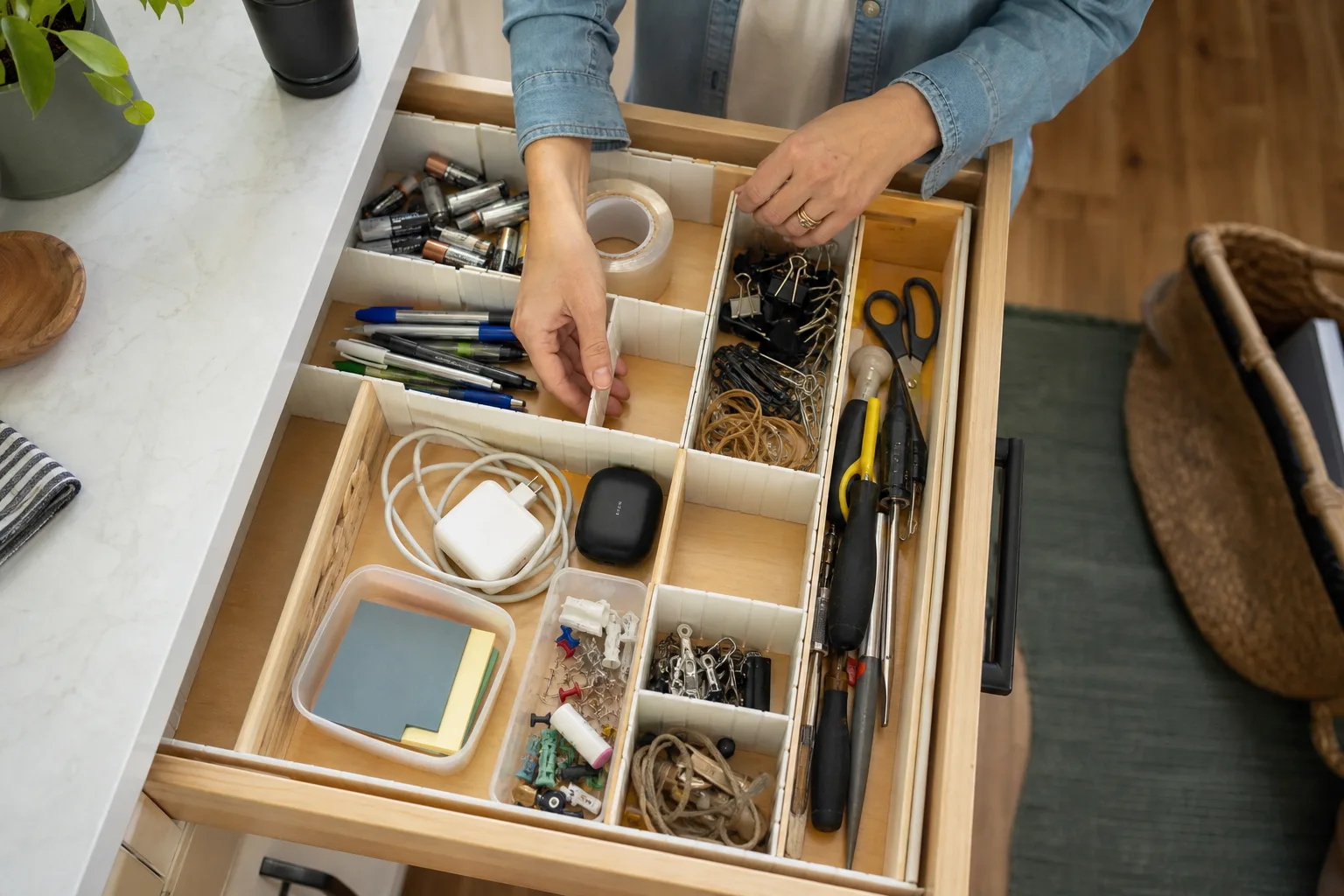 Organization
Drawer Dividers for the Kitchen Junk Drawer Reset
Divide by action—write, fasten, charge, measure—not by the random assortment currently filling the drawer.
Read guide → Organization
Shoe Storage for Narrow Entryways and Busy Households
Keep the active rotation near the door while protecting a clear walking path and giving wet footwear room to dry.
Read guide →